Background
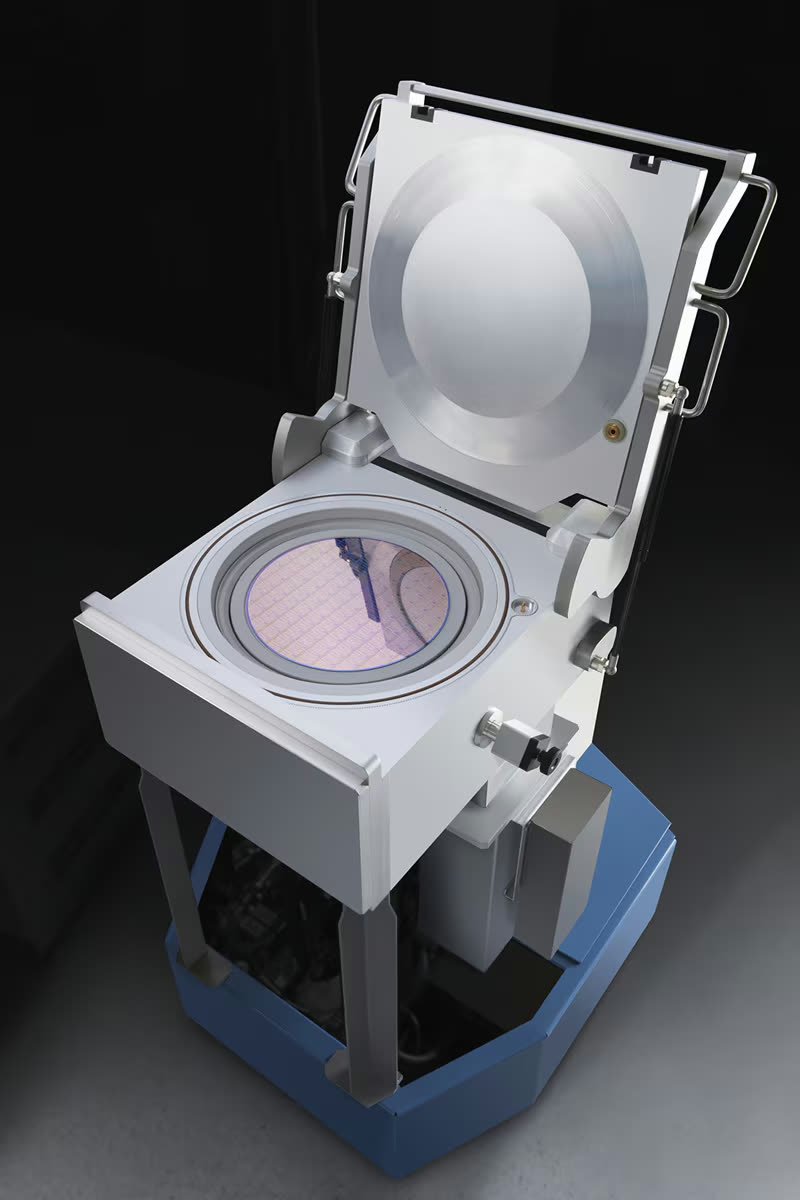
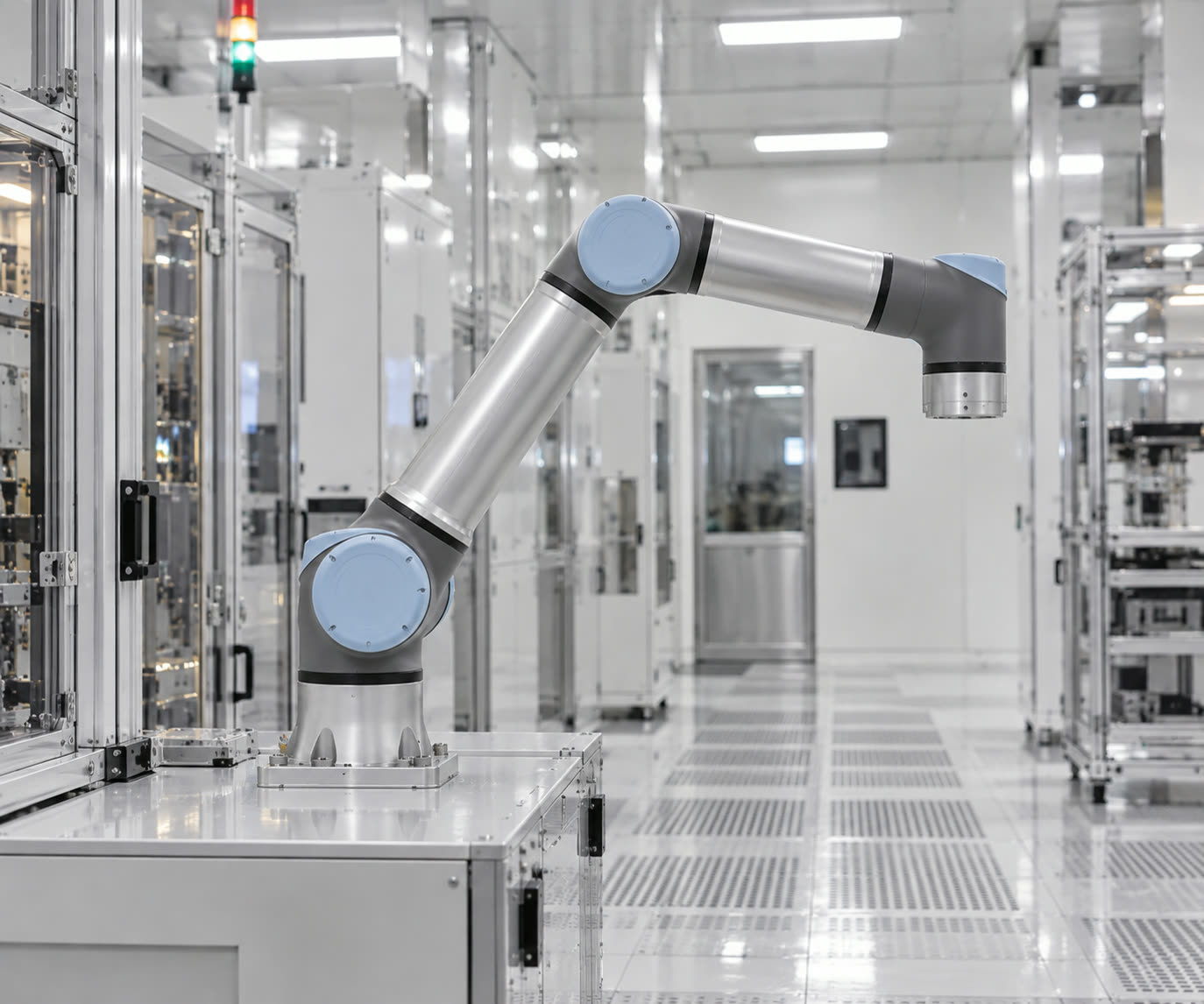
A Universal Robots collaborative robot station in the Automation Technology Group engineering lab performs automated leak checking. The station was working well for one product configuration, where the space around the product was not constrained. I did two pieces of work on that station:
Leak-check path
Validating whether the leak check could be extended to a tighter product configuration.
Tool rack
Designing a tool rack to replace manual end effector changes.
Leak-Check Path Development
The group wanted to determine whether the same mounting crane and station setup could be used for a different product configuration, where the available space is significantly tighter.
Constraints
- Full coverageThe robot has to reach every cavity and seam that requires leak checking.
- Tight clearanceSpace around the product is constrained, and the robot elbow collides easily.
- Existing setupThe existing mounting crane and station setup were to be reused.
Path development in RoboDK
- Orientation and placementI first chose the product orientation relative to the cobot and optimized its placement in the leak check area against the trade-off between reach and available space, and settled on the setup that reached every cavity and seam.
- Path continuityI determined where the path could be traced continuously and where the robot had to retract and reposition to clear the elbow, then kept the continuous runs as long as the clearances allowed.
- Approach anglesI selected the approach angle for each cavity and seam, holding the tool orientation consistent between features. A consistent approach makes the check repeatable from feature to feature and keeps a later change to one point a local edit rather than a re-teach of the path.
I proved that a collision-free leak check path is achievable for the selected product configuration within the existing setup. Because the existing station and mounting crane could be reused, the group did not have to build a second cobot station and crane for this product configuration, which saves the cost and build time of that station and keeps its cleanroom floor space free.
Tool Rack
End effector changes on the station were performed by hand. I was commissioned to design a tool rack that mounts to the existing station and houses different types of end effectors.
Capacity of the rack.
Capacity the design is extensible to.
- StructureAluminum extrusion structure mounting to the existing cobot station.
- LayoutTwo tool columns arranged to share the cobot's retraction space, which was otherwise unused.
- Custom bracketsResin-printed mounting brackets and corner brackets, designed because the vendor did not have suitable hardware for the installation.
- GuardingPlexiglass safety panels and a framing enclosure protecting lab personnel from protruding tool tips.
- VisibilityPanels kept clear so the number of tools, and whether each is mounted or dismounted, is visible from outside the enclosure.
The rack replaces hand tool changes at the station. With the end effectors staged in fixed positions, the lab can develop multi-tool workflows in which the cobot changes tools within a cycle rather than a person changing them between runs.
Result
A validated collision-free leak check path for a constrained product configuration, run on the existing station and mounting crane, which saves building a second cobot station and crane for that configuration along with its cost, build time and cleanroom floor space.
An 8-position tool rack, extensible to 12, mounted to the same station. It replaces hand tool changes and stages the end effectors for multi-tool automated workflows.